





Can Micro Inverter Off Grid work with battery storage?
- 1. How do micro inverters function in off-grid solar systems?
- 2. Can micro inverters be integrated with battery storage in off-grid setups?
- 3. What are the advantages of using micro inverters in off-grid solar systems?
- 4. Are there any challenges when integrating micro inverters with battery storage?
- 5. How do micro inverters compare to traditional inverters in off-grid applications?
- 6. What factors should be considered when selecting micro inverters for off-grid systems?
1. How do micro inverters function in off-grid solar systems?
Micro inverters are devices that convert direct current (DC) from individual solar panels into alternating current (AC) at the panel level. In off-grid systems, they operate independently, providing AC power directly to household appliances and charging batteries. This decentralized approach enhances system reliability and efficiency, especially in areas with partial shading or complex roof structures. Each micro inverter's performance is unaffected by others, ensuring that a single panel's underperformance doesn't impact the entire system.
2. Can micro inverters be integrated with battery storage in off-grid setups?
Yes, micro inverters can be integrated with battery storage in off-grid systems through an AC-coupling method. In this configuration, a grid-forming inverter creates a stable AC microgrid, which the micro inverters synchronize with. The AC power from the micro inverters is then used to charge the batteries via the grid-forming inverter. This setup allows for efficient energy storage and retrieval, maintaining system stability and performance.
3. What are the advantages of using micro inverters in off-grid solar systems?
Micro inverters offer several benefits in off-grid applications: enhanced energy harvest in non-ideal conditions, improved system resilience, and detailed monitoring capabilities. They can deliver a 12-20% higher annual energy yield compared to traditional string inverters in shaded environments. Additionally, micro inverters provide panel-level diagnostics, allowing for quick identification and resolution of issues, which is particularly valuable in remote locations.
4. Are there any challenges when integrating micro inverters with battery storage?
Integrating micro inverters with battery storage presents challenges such as increased system complexity and potential efficiency losses due to multiple conversion stages. The AC-coupling method requires careful system design to ensure compatibility and optimal performance. Additionally, the initial cost of micro inverter systems can be higher compared to traditional DC-coupled systems, which may be a consideration for budget-conscious consumers.
5. How do micro inverters compare to traditional inverters in off-grid applications?
Micro inverters differ from traditional string inverters in their decentralized design, offering advantages like improved energy harvest in shaded conditions and enhanced system resilience. However, they may come with higher upfront costs and increased system complexity. The choice between micro inverters and traditional inverters depends on specific site conditions, budget, and performance requirements.
6. What factors should be considered when selecting micro inverters for off-grid systems?
When selecting micro inverters for off-grid systems, consider factors such as conversion efficiency, compatibility with panel voltage, surge handling capacity, and support for battery integration. It's essential to choose units designed specifically for standalone or remote installations, ensuring they meet the unique demands of off-grid environments.
In conclusion, integrating micro inverters with off-grid solar systems and battery storage offers enhanced energy efficiency, system resilience, and monitoring capabilities. While there are challenges to consider, such as increased complexity and potential efficiency losses, the benefits often outweigh these drawbacks, making micro inverters a viable option for off-grid energy solutions.
For personalized advice and a detailed quote tailored to your specific needs, please contact us at info@csinverter.com or visit our website at www.csinverter.com.


Modified Sine Wave Inverters
What devices can it power?
Suitable for fans, lights, TVs, laptops, and small electric tools.
How to install the battery terminal wire?
Connect the red terminal wire to the positive pole of the battery and the black terminal wire to the negative pole. Ensure the interface is firm and there is no short circuit when connecting.
Is customization available?
OEM/ODM support for logo, color, and packaging design.
What is the difference between modified sine wave and pure sine wave?
Modified sine wave is suitable for most ordinary home appliances and electronic devices; pure sine wave is suitable for devices with extremely high power requirements (such as precision instruments). This modified sine wave is more cost-effective and meets the needs of most daily scenarios.
Pure Sine Wave Inverters
Can this inverter drive a 3P air conditioner and a refrigerator at the same time?
Yes. The rated power of a 3P air conditioner is about 2200W-2500W, and an ordinary double-door refrigerator is about 150W-300W, with a total power of about 2350W-2800W, which does not exceed the 3000W continuous power; and the peak 6000W can cope with the instantaneous startup impact of the air conditioner. When using, ensure the battery capacity is ≥200Ah (12V) to ensure battery life.
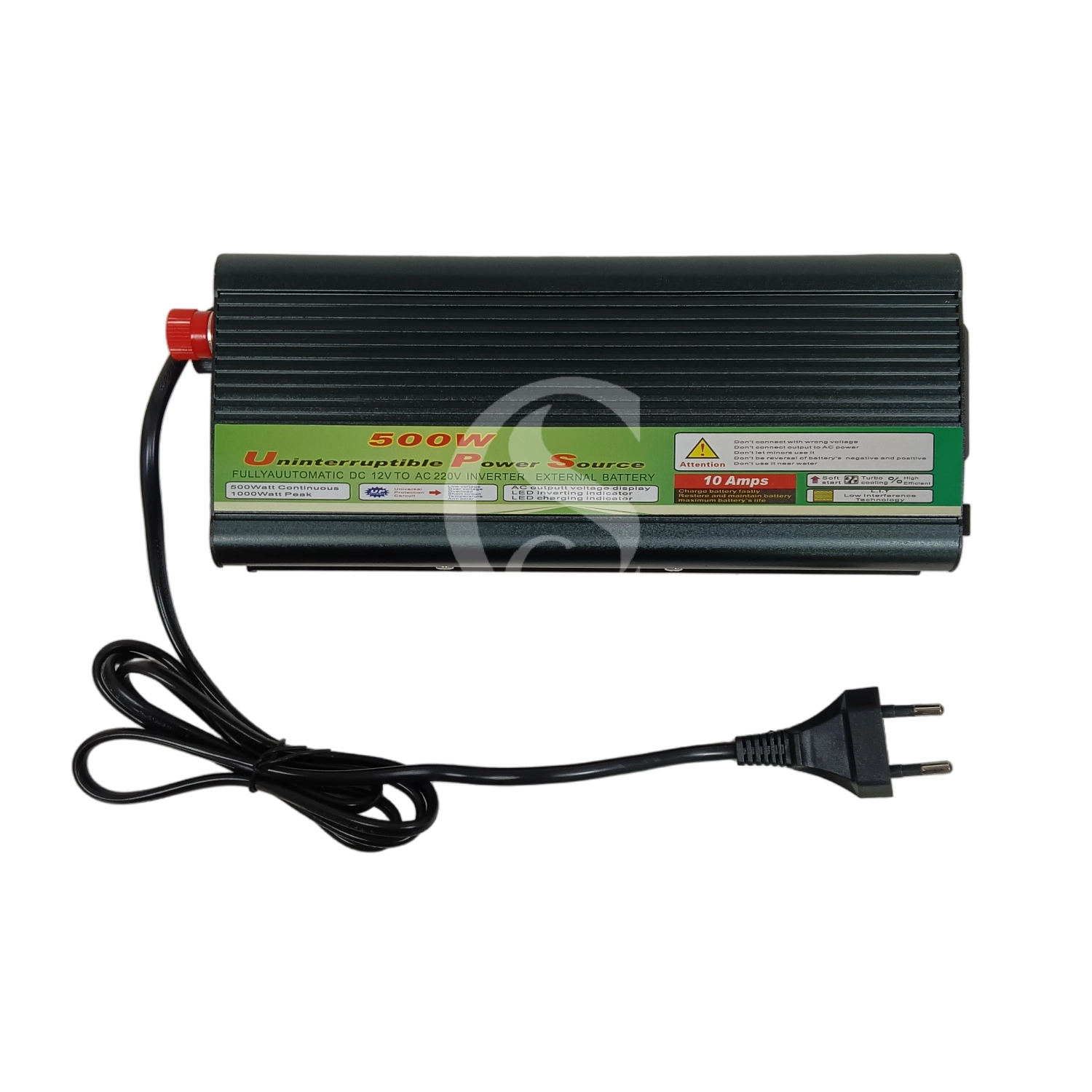
Congsin 500W 12V to 220V inverter delivers reliable off-grid power with its modified sine wave design. This portable 500W DC to AC power inverter efficiently converts 12V DC to 220V AC, ideal for outdoor and emergency use. Trust Congsin for stable, portable energy solutions.
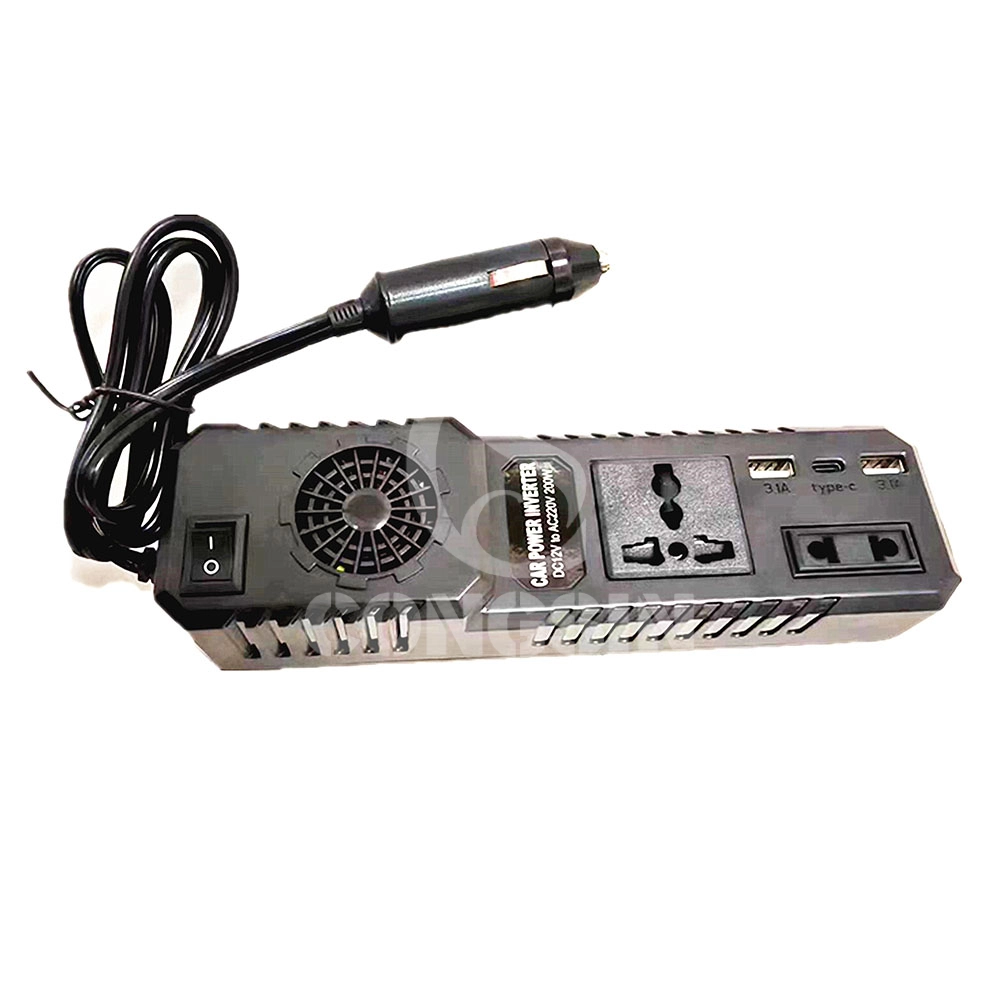
This 200W Modified Sine Wave Car Power Inverter is a compact and practical power conversion device designed for vehicle use. It supports dual input (DC12V/24V) and outputs AC220V, compatible with various electronic devices. Equipped with a Type-C port and dual 3.1A USB outputs, it can charge laptops, phones, cameras, drones, and other small electronics simultaneously—perfect for outdoor travel, emergency backup, and mobile work scenarios.
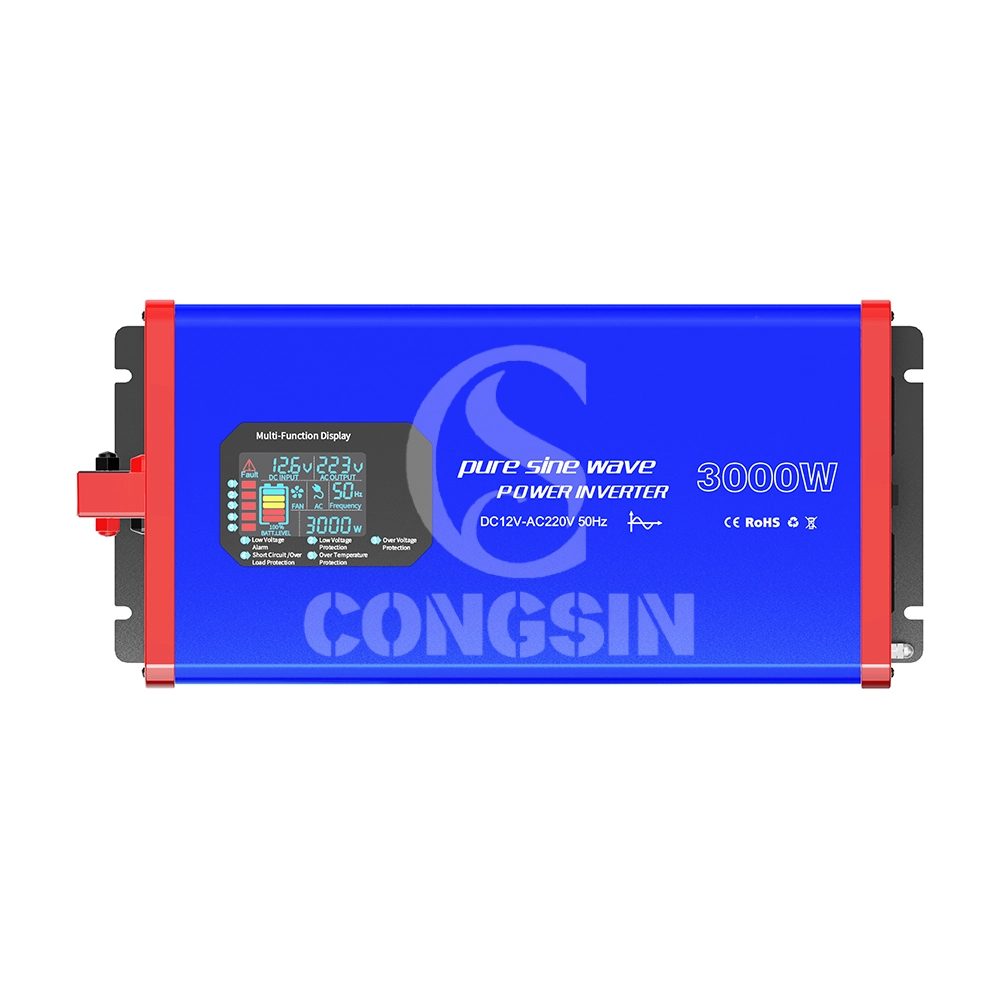
This 3000W full-power pure sine wave inverter (Model: CS3000PSW) adopts pure sine wave output technology (waveform distortion rate <2%), and the output power is highly consistent with mains power quality. It can safely drive high-power precision loads such as air conditioners, refrigerators, medical instruments, and small industrial equipment, avoiding equipment malfunctions or shortened service life caused by unstable waveforms. The device supports DC 12V input (compatible with 10.5V-14.8V wide voltage), continuously outputs 3000W full power, and has a peak power of 6000W, easily coping with the instantaneous startup impact of high-power devices; it is equipped with 4 AC universal sockets (max current 16A) + 2 USB 3.0 fast-charging ports (22.5W per port) to meet the simultaneous power supply needs of multiple devices. Built-in six-fold safety protection (overload, overvoltage, undervoltage, short circuit, overtemperature, reverse connection), combined with dual intelligent silent cooling fans (noise ≤45dB), it achieves the triple advantages of "high power + high safety + low noise," suitable for home emergency, outdoor engineering, vehicle-mounted power supply, small industrial scenarios and other fields.
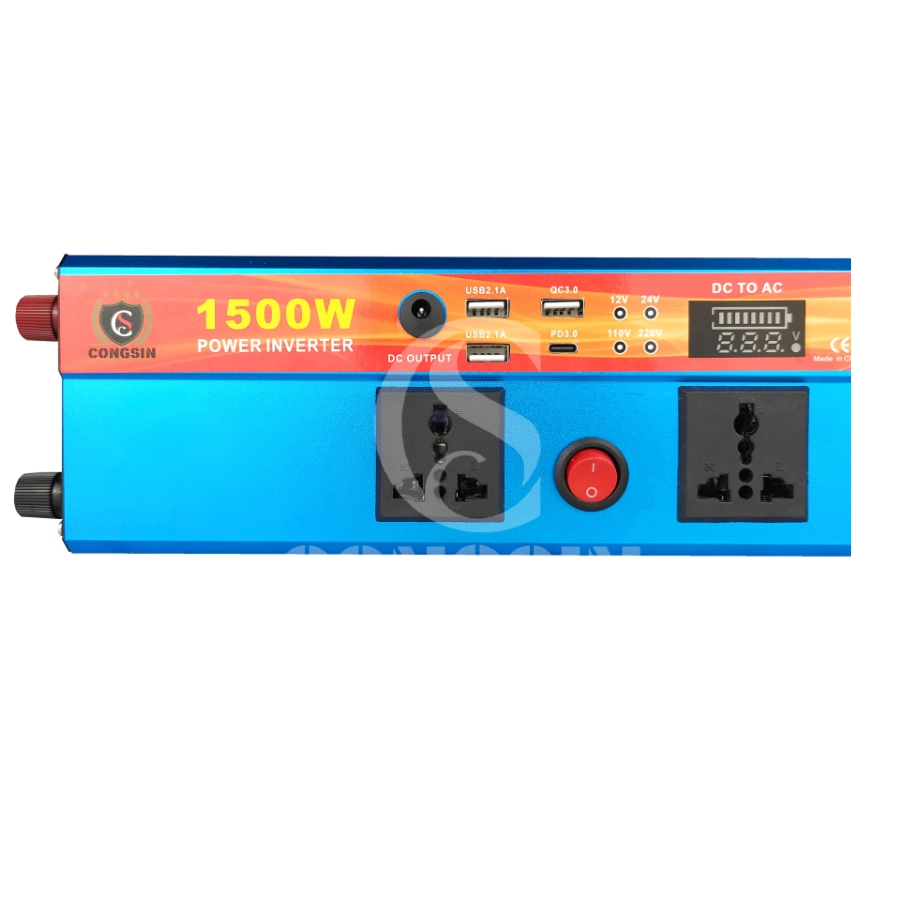
Our CS1000DDBC 1000W modified sine wave inverter is a professional power conversion device that converts DC 12V from batteries into AC 220V electricity. It is designed with user convenience in mind, featuring an LED display for real-time status monitoring, multiple charging ports (3 USB, 1 Type-C, 1 DC 12V) and two universal sockets to power a wide range of devices simultaneously. Its compact size (250×95×55mm) and lightweight design (NW: 0.84kg) make it easy to carry, ideal for outdoor activities, emergency home use, and on-the-go power needs.
Get in Touch with Our Team
You can also communicate with us directly through our online contact form. Please fill in the following information, and our team will contact you as soon as possible after receiving your message.

CONGSIN is a trusted OEM factory for power inverters, solar charge controllers, and DC converters. Reliable solutions for global B2B buyers.
 High Quality
 7/24 Service
 Guaranteed Warranty
© 2025 Congsin. All Rights Reserved.
 WeChat
 Scan QR Code
sin cong
teaimei10
Whatsapp: +8618028086791
Scan QR Code